India is blessed with rich biodiversity and breathtaking natural beauties. The country is also home to many beautiful national parks and wildlife sanctuaries, each offering a unique and memorable experience for visitors. There are 106 National Parks in India, out of which the Jim Corbett National Park, Uttarakhand is the oldest one and the Raimona National Park, Assam is the latest National Park in India. The Hemis National Park, Ladakh is the largest national park covering a massive area of 4,400 km2 and the South Button Island National Park in Andaman and Nicobar is the smallest national park in India. The state of Madhya Pradesh has the highest number of national parks with a total tally of 11 in its fleet. Here is a random list of 10 popular National Parks of India:
JIM CORBETT NATIONAL PARK
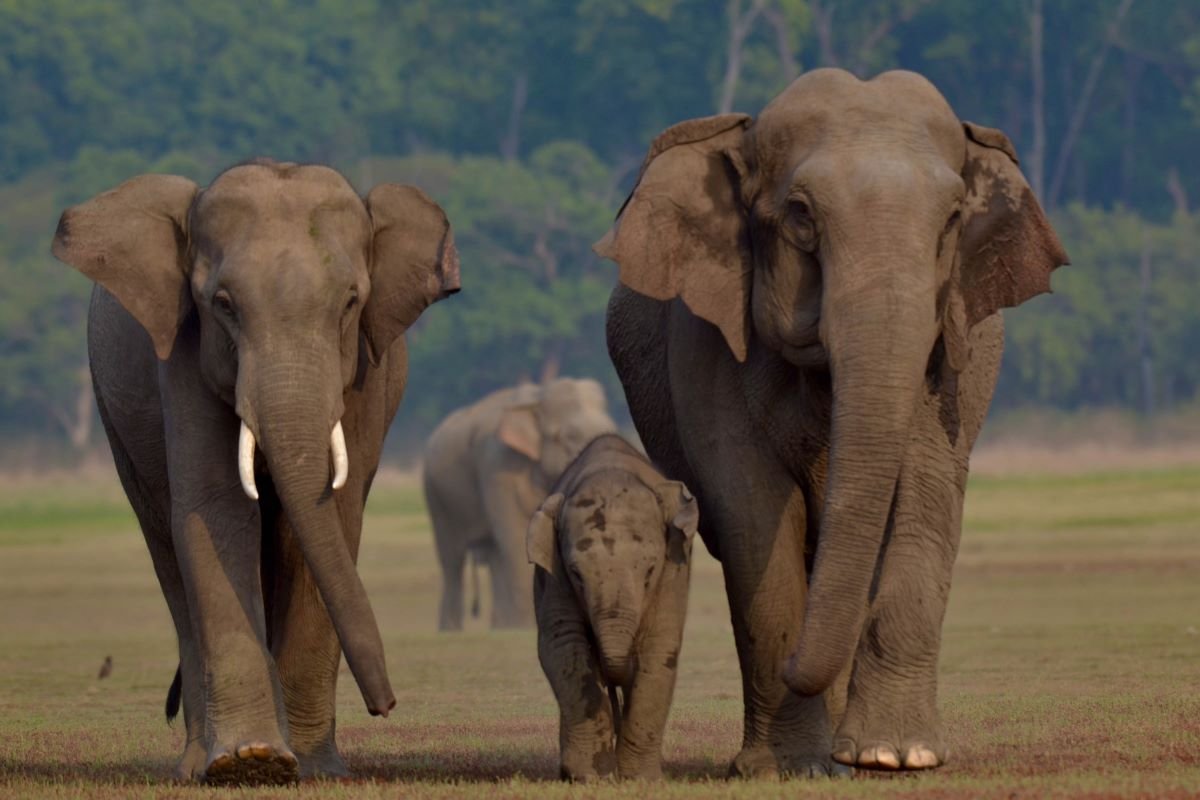
Established in the year 1936 as Hailey National Park, this is the oldest and one of the most popular national parks in India. Located in the district of Nainital, Uttarakhand, this park is sprawling over an area of more than 1318 sq. km. out of which 520 km2 is the core area and the rest is the buffer area. The Project Tiger was launched in this National Park in 1974. This park is the home to more than 488 different species of plants, 50 species of mammals, 586 species of both resident and migratory birds and 25 species of reptiles. Almost 73% of the total area of the park is covered by woodland.
Safari zones:
For the convenience of the tourists, the entire park is divided into 8 safari zones, namely, Dhikala zone, Bijrani zone, Jhirna Zone, Garjiya Zone, Sitabani Zone, Pakhro Zone, Dhela zone, and Durga Devi zone. You can prebook safari in anyone of the aforesaid zones on the official website of Jim Corbett National Park.
Flora:
The major portion of the National Park is covered by Sal dominated wooded vegetation. Some other major flora species of the park are Bali flower, Kusum flower, Bela flower, Mahua flower etc.
Fauna:
The Jim Corbet National Park is famous for Royal Bengal Tiger. This park has the highest number of the big cats among all the Indian national parks. Apart from tiger, Corbett is home to some endangered and rare species of mammals like Asian elephant, chital, sambar deer, gharial etc. Moreover, the park hosts nearly 600 species of both resident and migratory birds which includes doves, finches, eagles, hornbills, robins, bee-eaters, babblers, kingfishers etc. The Birdlife International, a bird conservation organisation has declared Corbett National Park as an Important Bird Area (IBA). Apart from mammals and avifauna, the park is also a home for various reptiles, butterflies and amphibians.
How to reach:
By Air: Patnagar Domestic Airport is the nearest airport to the Jim Corbett National Park which is almost 83 km away from the park. Regular flights are available to Patnagar from the major cities like Delhi, Lucknow, Mumbai, Bhubaneswar, Goa, Pune, Ahmedabad and Patna. Taxis are available from the airport to the entry gate of the park.
By train: The Railway Station in Ramnagar receives regular trains from all the nearby stations like Delhi, Moradabad and Bareilly. The Ramnagar station is hardly a kilometre away from the Corbett National Park. You can book your reservation by clicking the link: https://www.irctc.co.in/.
By road: The Jim Corbett National Park is situated at a distance of hardly 260 kms from Delhi, the national capital of India. Ramnagar, the nearest bus station is well connected with all the nearby major towns and cities. The Uttarakhand State Government plies buses to Ramnagar from all the nearby cities and towns. You can book your bus to Ramnagar via Redbus.in.
Where to stay:
Jim Corbett National Park is the only national park in India which provides night stay facility to the tourists inside the park. The Government run Dhikala Forest Lodge is an old building constructed by the British. This lodge is very popular among the tourists. You can enjoy a luxury stay inside the jungle with breath taking vistas of the landscape. There are wide range of accommodation facilities in the lodge depending upon your budget. Book your stay by visiting the official website of the national park.
Best time to visit:
The best time to visit Corbett National Park is December to April. During this time the weather remains moderate and hence considered to be ideal for sighting wildlife.
KAZIRANGA NATIONAL PARK

Kaziranga National Park is one of the most popular wildlife destinations in India. Located in the districts of Nagaon and Golaghat, Assam, this National Park is a UNESCO World Heritage site and a Project Tiger Reserve. In the year 1968, the Government of Assam declared Kaziranga as a designated national park covering an area of 430 sq. km. On 11 February, 1974, the Government of India accorded sanction and declared Kaziranga as a National Park. In 1985 UNESCO has declared the park as a World Heritage Site. Kaziranga is the world’s largest habitat of Great One Horned Rhinoceros. The mesmerizing lush green landscape of the park attracts tourists and wildlife enthusiasts from around the globe every year.
Safari zones:
Kaziranga National Park is divided into 4 safari zones for better convenience of the tourists. The zones are: Eastern Zone (Agoratoli), Central Zone (Kohora), Western Zone (Bagori) and Burhapahar Zone. Every zone has their own and unique attractions. The Eastern zone is the best zone for birdwatching. There are two types of safaris in Kaziranga, jeep safari and elephant safari. Elephant safari is available only in the Central zone. Elephant safari is operated in the morning hours. However, jeep safaris are available in the morning and after sessions. In a jeep safari, 6 people can be accommodated at a time in a single jeep. There is an extra charge for video and still camera carried by tourists. You can book your safari on the official website of the Kaziranga National Park.
Flora:
There are four types of vegetations in the Kaziranga National Park, namely, alluvial inundated grasslands, alluvial savanna woodlands, tropical moist mixed deciduous forests and tropical semi evergreen forest.
Fauna:
Kaziranga is the home to almost two third of global population of the Great One Horned Rhinoceros. Apart from the One horned rhinoceros, there are some other endangered and rare species like Asian Elephant, Royal Bengal Tiger, Swamp Deer, Indian Hog Deer, Wild Water Buffalo, Hoolock Gibbon etc. Moreover, Kaziranga is home to 478 species of birds (resident and migratory) and several reptile, butterfly and amphibian species. The Eastern Range of the Kaziranga National Park is a major attraction for the birdwatchers. The National Park is declared as an Important Bird Area (IBA) by the Birdlife International.
How to reach:
By Air: Rowriah (Jorhat) is the nearest airport, which is about 100 km away from Kaziranga National Park. You can easily hire a cab from the airport to Kaziranga. For the international travellers, Lokapria Gopinath Bordoloi International Airport, Guwahati is the nearest international airport which receives regular flights from all the major cities of India and from some selected destinations around the world.
By Train: If you are visiting by train, Furkating is the nearest Railway station, which is about 80 km away from the park. Cabs are available from the Furkating Railway Station to Kaziranga.
By road: The surface distance between Guwahati (capital city of Assam) and Kaziranga is almost 230 km. Regular buses and taxis are available from Guwahati to Kaziranga.
Where to stay:
There are lots of resorts, guest houses, cottages around the park. You can choose one of them as per your budget. However, during the peak time (December – March), most of them remain booked. To avoid last minute hassle, it is advised to pre-book your stay well ahead of your visit.
Best time to visit:
The Kaziranga National Park remains open for tourists from October to April (depending upon the weather conditions). But the best time to visit the park is November-April from the point of view of wildlife sighting.
RANTHAMBORE NATIONAL PARK

Ranthambore National Park, Rajasthan, is one of the best National Parks in India for sighting the big cat, the Royal Bengal Tiger. Located at Sawai Madhopur, 180 km away from Jaipur, the capital city of Rajasthan, Ranthambore National Park covers a vast 1,334 sq. km. (515 sq. miles) of area. The name Ranthambore derives from the Ranthambore Fort which is situated within the National Park. Once a favorite hunting ground for the Royal Maharajas of Jaipur, the Ranthambore National Park was established as the Sawai Madhopur Game Sanctuary in the year 1955 covering an area of 282 sq. km (109 sq. miles). In the year 1973, it was declared as a Project Tiger Reserve and on 1st November, 1980 it has been declared as a National Park. In 1992 the Tiger Reserve was extended and included the adjoining Keladevei Sanctuary and Sawai Mansingh Sanctuary.
Safari zones:
There are 10 safari zones in Ranthambore National Park, zone No.1 to zone No10. You can enjoy two types of safaris in any zones at Ranthambore; Jeep Safaris and Canter safaris. In a jeep, 6 occupants can be travelled, while the canters can accommodate 20 people at a time. Jeep safaris are a little more expensive than the canter safaris. You can book a jeep safari in sharing basis. Canters are ideal for larger group of tourists. However, you can also book a canter safari on sharing basis. Canters are open buses with a driver and a professional guide. Safaris are available from October to June depending upon the weather condition. You must book a safari at least 90 days in advance. Safaris are operated in morning and afternoon for 3 hours in each session. Bookings are available on the official website of the Rajasthan Tourism.
Flora:
Ranthambore is rich in its biodiversity. There are 539 species of flowering plants available at Ranthambore National Park out of which dhok, mango, tamarind and banyan are some common species found in abundance in the park.
Fauna:
Apart from its rich flora, the National Park is home to almost 320 species of both migratory and resident birds, 40 species of mammals and 35 species of reptiles. The common mammal species are Royal Bengal Tiger, Striped Hyaena, Sambar Deer, Chital, Jungle Cat, Sloth Bear, Black Buck, Nilgai, Wild Bore etc. The reptile species include Snub Nosed Marsh Crocodile, Desert Monitor Lizard, tortoises, Russel’s Viper, Banded Krait, Common Kraits, Cobras etc.
How to reach:
By air: If you are visiting by air, Sanganer Airport, Jaipur is the nearest airport which is almost 180 kms away from the Ranthambore National Park. Cabs are easily available from the Sanganer Airport, Jaipur to Ranthambore.
By train: The nearest railway station is Sawai Madhopur which is 14 kms away from the Park. Sawai Madhopur Railway Station is well connected with Jaipur, New Delhi and other major Railway Stations of India. Taxis and autorickshaws are available from the Railway station to the entry gate of the National Park.
By road: The national park is also well connected with the all the major cities by road. State bus services are available to Ranthambore from Jaipur, New Delhi, Ajmer and Jodhpur. Public Buses are also available from all the nearby major cities and towns.
Where to stay:
There are a lot of resorts, guest houses, cottages around the Ranthambore National Park. You can choose one of them as per your budget. To avoid last minute hassle, it is advised to pre-book your stay well ahead of your visit.
Best time to visit:
October to June is the best time to visit Ranthambore National Park subject to weather condition.
KANHA NATIONAL PARK
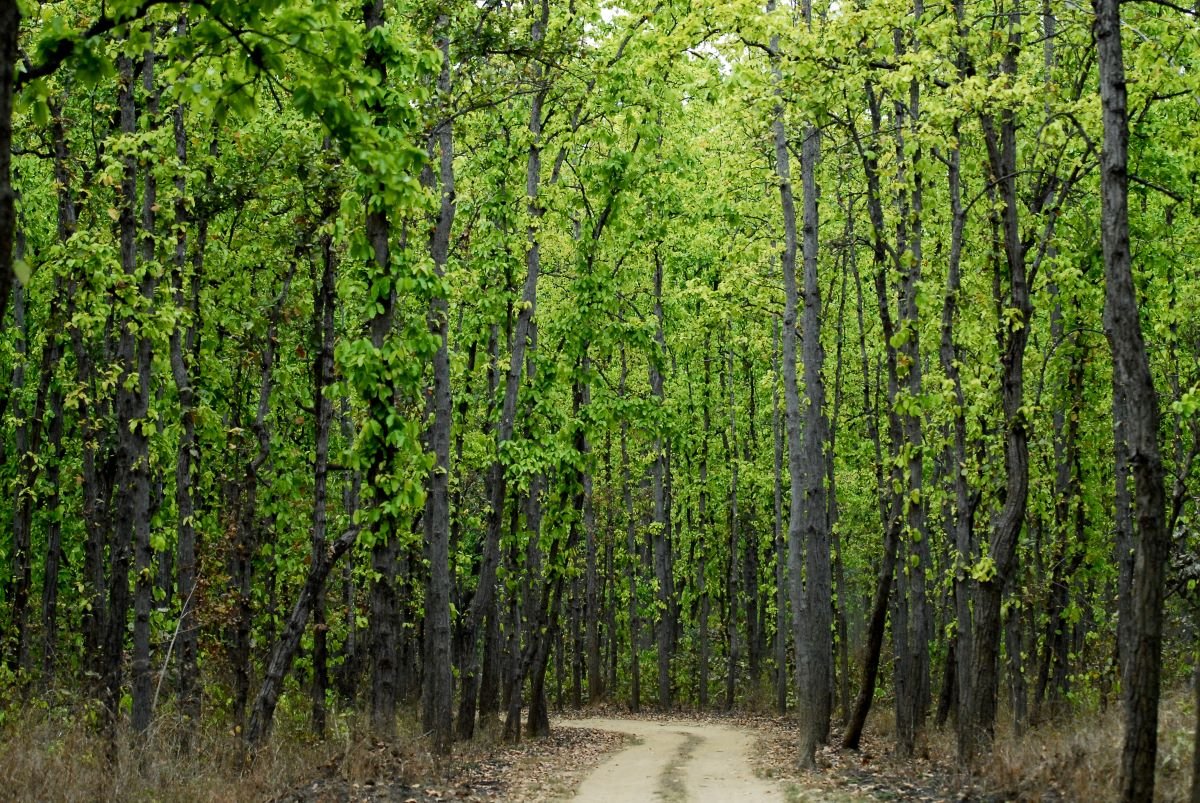
Out of 11 national parks in Madhya Pradesh, the Kanha National Park or Kanha-Kisli National Park is the largest national park in the state. This park was created on 1st June, 1955 and the same has been declared as a Tiger Reserve in 1973. Including the buffer area, the Kanha National Park is sprawling in a massive area of 1945 sq. km out of which 940 sq. km. is the core area. This national park covers two districts of Madhya Pradesh. Kanha is the first Tiger Reserve in India to officially introduce a mascot, Bhoorsingh, the Barasingha. This National Park is a mix of moist deciduous forest and dry deciduous forest. The lush green forest and its scenic beauty of the park attract nature lovers from around the world. It is also said that the beauty of Kanha inspired Rudyard Kipling for his famous novel, the ‘Jungle Book’.
Safari Zones:
Kanha National Park is divided into 4 safari zone, namely, Mukki, Kanha, Kisli and Sarhi zones. Jeep safari is available in all the four zones in two shifts. From 16th October to 15th February the timing of morning safari is from sunrise to 11AM and the timing of evening safari is from 2PM to sunset. However, the evening safari timing changes post 15th February. Evening safari is closed in Kanha on every Wednesday. Open hooded 4X4 jeeps with a driver and an expert naturalist are allowed into the park. You can book the safari through the official website of Kanha Natrional Park or through travel agent or from the ticket window, if available. But it is always advisable prebook the safari to avoid last minute hassle.
Flora:
Kanha National Park is the home to over 1000 species of flowering plants. The low land forest of the park is predominantly covered by Sal and other trees while the highland is totally different. The Indian ghost tree is also found in the dense forest of Kanha National Park.
Fauna:
Some of the major mammal species of Kanha are Royal Bengal tiger, Indian leopard, Dhole, Sloth bear, Bengal fox, Indian jackal, Gaur etc. Kanha is famous for Barasingha, a swamp deer species which is called as the ‘Jewel of Kanha’. Through an effective conservation and management effort, the park has seen significant rise of population of this Vulnerable species. Apart from these mammal species, Kanha is also home to more than 300 species of birds both resident and migratory. Among those some common bird species are hornbills, bee-eaters, rollers, egrets, eagles, woodpeckers, pigeons, flycatchers, buzzards, kingfishers, lapwings etc.
How to reach:
By air: Jabalpur is the nearest airport of Kanha National Park which is 160 km away from the park. Taxis are easily available from the airport to the park.
By train: Gondia and Jabalpur are the two nearest railway stations from Kaha. Gondia is 130 km away from Kanha while Jabalpur is 176 km away from the park. Regular trains are available to these two stations from all the major cities of India.
By road: Kanha National Park is well connected with all the major cities of Madhya Pradesh, Maharashtra and Chhattisgarh. Regular buses are available from Raipur, Jabalpur, Nagpur, Bilaspur and Bhilai to Kanha.
Where to stay:
A wide range of resorts and hotels are available around the National Park depending on the budget and amenities. You can choose one of them as per your choice and budget.
Best time to visit:
October to March is the best time to visit Kanha National Park subject to weather condition. However, the park remains open for tourists from 15th October 30th to June.
SUNDARBANS NATIONAL PARK
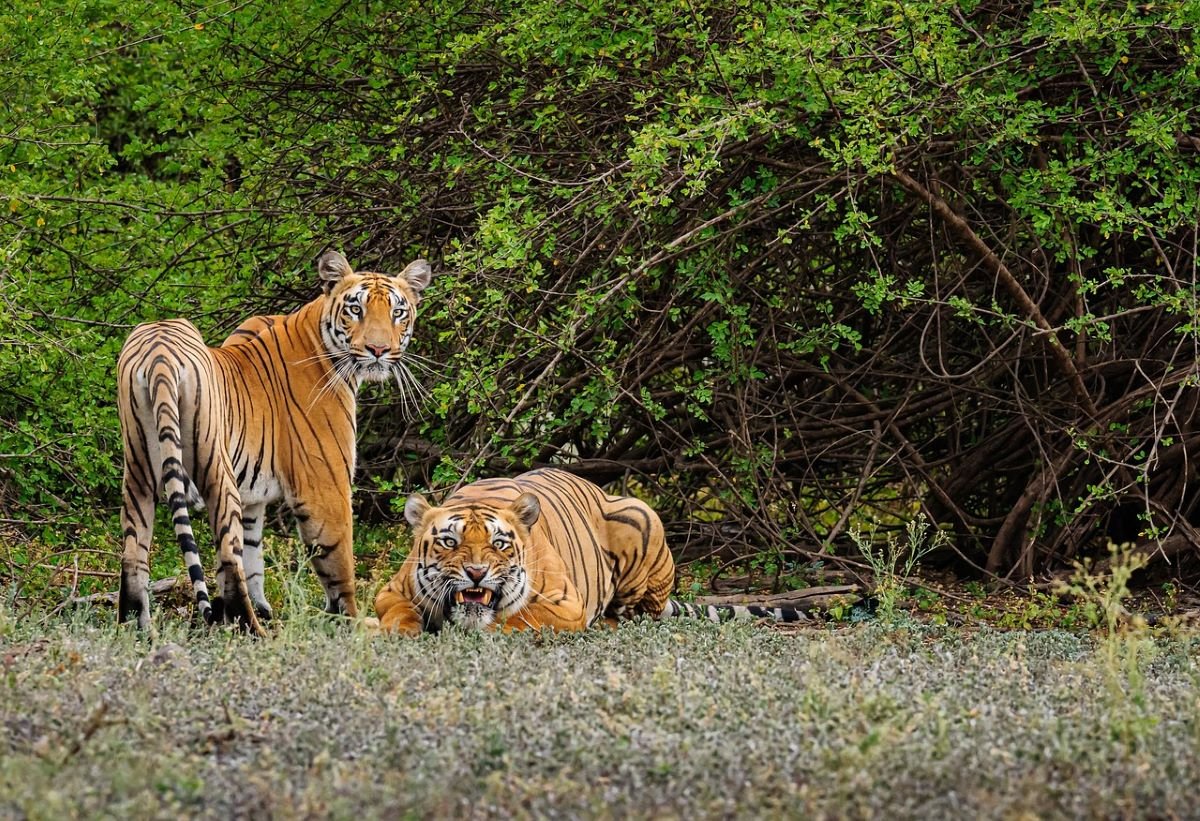
The Sundarbans is the world’s largest mangrove forest covering a massive area of 10,000 KM2 of land and water. Out of the total area, more than half is in the Indian state of West Bengal and the rest is in Bangladesh. The portion of the Sundarbans Mangrove Forest which falls in India (1330 sq. km.) has been declared as Sundarbans National Park in the year 1984 and the same has been designated as a UNESCO world heritage site in 1987. The National Park is adjacent to the Sundarbans Reserve Forest in Bangladesh. This is one of the most biologically productive ecosystems in the world. The present Sundarbans National Park was declared as a Tiger Reserve in 1973 itself. The Sundarbans National Park is declared as a Ramsar site in the year 2019. The Sundarbans is one of the largest habitats of Royal Bengal Tiger.
Safari Zones:
There is no Jeep safari available in the Sundarbans National Park. However, you can avail a boat safari to enjoy the rich biodiversity of the park. Boats are operated from 8:30 AM to 4:00 PM. No boats are allowed after 6:30 PM into the protected area. The park remains open for tourists round the year. But winter season is the best time for boat safari in Sundarbans. You can book boat safari on the official website of the Sundarbans Tiger Reserve
Flora:
The Sundarbans National Park has a rich variety of flora. There are 64 plant species and 78 mangrove species in Sundarbans. Some common plants found in Sundarbans are Sundari tree, Golpati, Champa, Dhundul, Genwa and Hatal.
Fauna:
The Sundarbans National Park is famous for Royal Bengal Tiger. However, the park is home to some other rare and endangered species of mammals, birds and reptiles. Fishing cat, Rhesus macaque, leopard cat, Indian grey mongoose, wild boar, flying fox, pangolins are some mammal species of Sundarbans. Chital and Rhesus macaque are the common sightings in Sundarbans. Apart from these, the park is home to a variety of reptiles including monitor lizard, gharials, rock python, Russel’s viper, dog faced water snake, checkered keelback, red-tailed bamboo pit viper, Chinese green viper, common krait etc. Reportedly more than 100 people are killed yearly due to snake bite in Sundarbans. The park is also a habitat of a variety of bird species. Some bird species found in Sundarbans are Collared kingfisher, Black-capped kingfisher, Ruddy kingfisher, American white ibis, Lesser adjutant, Buffy fish owl, Mangrove whistler, Spot-billed pelican etc.
How to reach:
By air: The nearest airport of Sundarbans is the Netaji Subhash Chandra Bose International Airport, Kolkata which is 120 km away from the starting point of Sundarbans safari, the Godkhali port. Taxis are available from the airport which takes almost 3 hours drive to Godkhali port.
By train: The nearest major railway station is Sealdah station in West Bengal. This station is well connected by train with all the major cities of India. The nearest local railway station is Canning station which is connected with Sealdah by local train. It takes one and half hour train journey from Sealdah to Canning. Share cabs are available at Canning Railway station to the entry point of Sundarbans.
By road: Public buses are available from Kolkata to Canning and further Canning to Godkhali. Moreover, one can hire a taxi directly to Godkhali from Kolkata. The road distance from Kolkata to Godkhali is about 120 km.
Where to stay:
Staying in Sundarbans is not at all a problem for tourists. A wide range of resorts and cottages are available around the National Park depending on the budget and amenities. You can choose one of them as per your choice and budget.
Best time to visit:
The Sundarbans National Park Remains open for tourists round the year. But winter is the best season for boat safari in Sundarbans.
BANDHAVGARH NATIONAL PARK
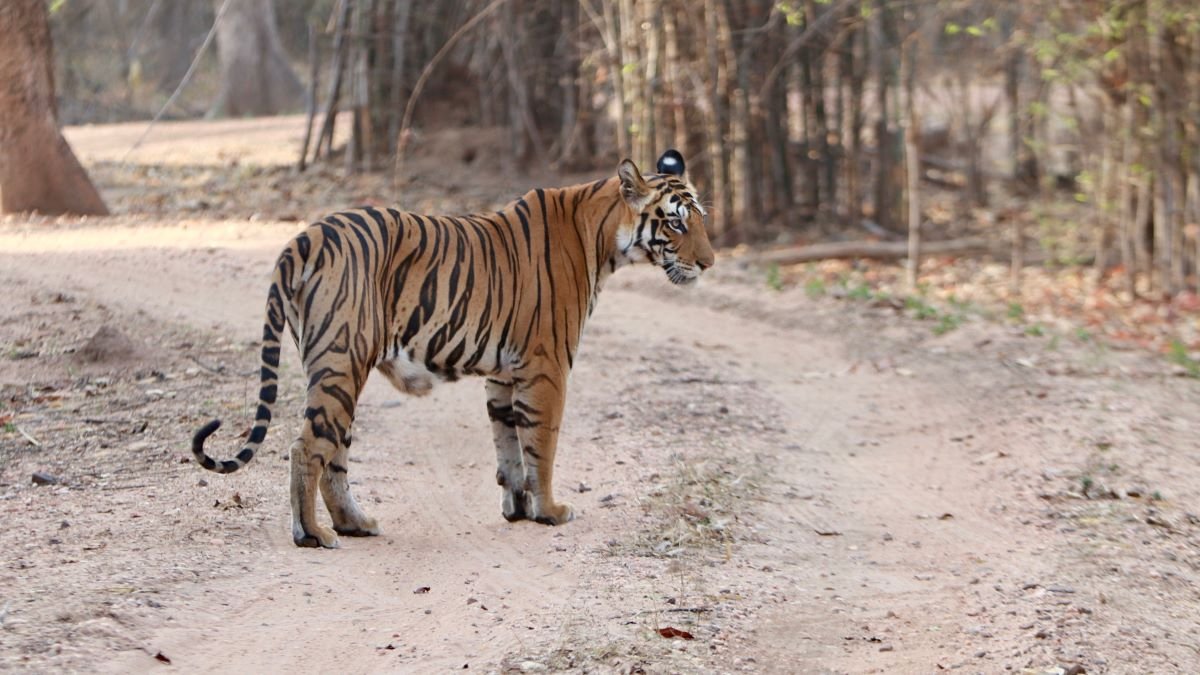
The Bandhavgarh National Park is one of the most popular wildlife destinations in India. Situated in the Umaria district of Madhya Pradesh, this park is one of the most densely populated tiger habitats in India. The name Bandhavgarh derives from the Bandhavgarh fort which is believed to be built by Lord Rama and gifted to Lakshmana to keep watch on Lanka. Bandhavgarh was declared as a National Park in 1968 and a Tiger reserve in 1993. The park is spread over an area of 1536 sq. km out of which 716 sq. km is core zone and the rests are buffer zone. The altitude of this National Park varies from 400m to 800m from the sea level. The Bandhavgarh National Park is the first in India to introduce ‘Hot Air Balloon Safari’ for the tourists.
Safari Zones:
The Bandhavgarh National Park is divided into 2 zones, core zone and the buffer zone. There are 3 safari zones in the core zone, namely, Tala zone, Magadhi zone and Khitauli zone. Similarly, the buffer area of the park is also divided into 3 safari zones, namely, Dhamokhar zone, Johila (Kalwa) zone and Panpatha zone. Out of these zones, the Tala zone is the oldest and most popular safari zone in Bandhavgarh National Park. Apart from wildlife sighting, this zone has some other attractions as well. The famous Bandhavgarh fort and ancient monuments like Shesh Saiya are in this zone. The Magadhi zone, also known as Gate 2, is consists of both dense forests and grasslands. Morning and afternoon jeep safaris are available in all the above 6 zones of the park. For booking a jeep safari you can visit the official website of the Madhya Pradesh Government.
Flora:
The Bandhavgarh National Park has a rich variety of flora. The forests of the park consist of tropical moist, deciduous forests with Sal, mixed forests and grasslands. Though the park is mostly covered by Sal forests, other flora species of Bandhavgarh are Saja, Dhauda, Tendu, Arjun, Palas, Salai, Bhira, Gamar, Dhaman, Kalasiris, Khair, Frankincense tree, Kusum and Haldu. The trees, bushes and grasses of the park provide food to the herbivorous animals round the year.
Fauna:
The Bandhavgarh National Park is famous for Royal Bengal Tiger. With the tiger at the top of the food chain, the park is a habitat of 37 species of mammals, 250 species of birds, 80 butterflies and various reptiles. The Bandhavgarh has a very high density of Royal Bengal Tiger in comparison to other National parks in India. Apart from tiger, some other common mammal species of Bandhavgarh are Nilgai, Chausingha, Chital, Chinkara, Wild boar etc. The park was home to a very small population of Gaur. But due to disease infected from the cattle, all of them died. In the year 2012 under a project initiated by the Madhya Pradesh Government Forest Department in collaboration with the Wildlife Institute of India and Taj Safaris, 50 Gaurs were shifted to Bandhavgarh from the Kanha National Park.
Apart from the mammal species as mentioned above, Bandhavgarh is home to more than 250 species of birds which includes Parakeets, Barbets, Mynahs, Woodpeckers, Eagles, Owls, Hornbills, Sunbirds, Flowerpeckers, Cormorants, Doves etc.
How to reach:
By air: The major airport near Bandhavgarh is the Jabalpur airport which is well-connected with all the big cities in India. The distance from the Jabalpur Airport to the park is almost 114 km. Taxis are available from the airport to the entry gate of the park.
By train: The nearest Railway station is Umaria station which is 35 km away from the park. This Railway station is well connected by train with all the major cities of India. You can easily hire a cab from the station to the National Park gate.
By road: There is no bus service to Bandhavgarh National Park. But you can hire a cab either from Jabalpur or from Umaria. The roads are excellent. Therefore, the National Park is well connected by cars from the nearby towns and cities like Jabalpur, Katni, Khajuraho, Nagpur, Umaria, Varanasi, Agra, Kanpur etc.
Where to stay:
Staying in Bandhavgarh is not at all a problem for tourists. A wide range of resorts, hotels and cottages are available around the National Park depending on the budget and amenities. You can choose one of them as per your choice and budget. Government run accommodations are also available in the Tala range inside the forest colony. You have to book such accommodation in advance through the official website of Madhya Pradesh Government.
Best time to visit:
The Bandhavgarh National Park remains closed for tourists from 1st July to 15th October every year. Most of the tourists prefer the period from November to March for visiting the park.
GIR NATIONAL PARK OR SASAN GIR NATIONAL PARK
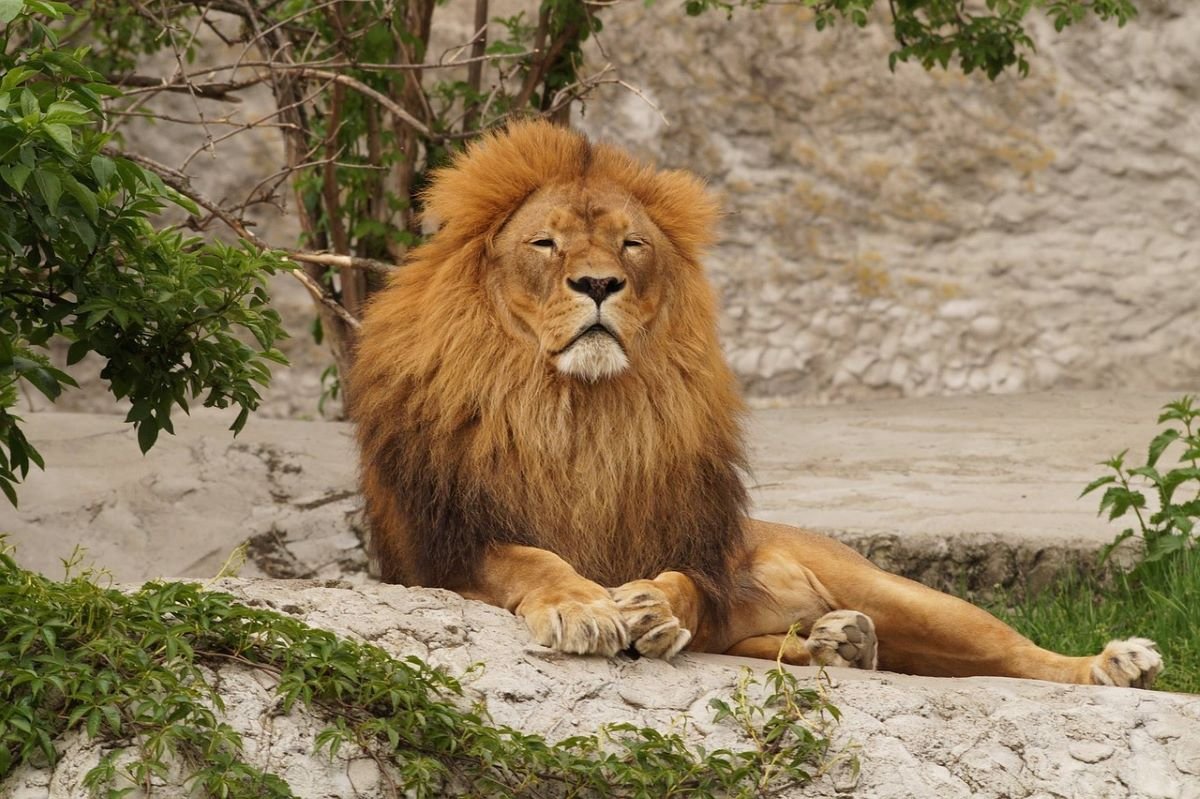
The Gir National Park also known as Sasan Gir National Park, situated at Talala Gir in the district of Somnath Gir, Gujarat is the only habitat of Asiatic Lion or Persian Lion. Historically the forest of Gir was a part of private hunting ground of the Nawab of Junagarh. The Gir National Park was established in the year 1965 in a total area of 1,410 sq. km of the erstwhile Nawab of Junagarh’s private hunting area. Out of the said total area, 258.71 sq. km of jungle is fully protected as National Park and the rests are declared as wildlife Sanctuary. The Gir National Park is considered as one of the most important protected areas in Asia because of its rich biodiversity. This national park is also one of the most popular wildlife destinations in India.
Safari Zones:
The Gir National Park provides two types of jeep safaris to the tourists, Gir Jungle Trail and Devalia Safari. Booking of safari in Gir is 100% online on the official website of Government of Gujarat. Since limited number of vehicles are allowed into the National Park, you must prebook your safari to ensure your visit.
Flora:
The Gir National Park has a diverse variety of flora range of deciduous trees, semi-evergreen and evergreen trees. As per studies, there are more than 400 species of plants in the national park. There are grasslands, savannah, open lands and scrub forests in the Gir. However, most of the areas of the national park is covered by broadleaf trees like Teak. Some other common trees of Gir are Flame of forests, Zizyphas, Dhak, Jamun, Tendu, Babool, Banyan and Acacia.
Fauna:
The Gir National Park is the only habitat of Asiatic Lion which is an Endangered species as per the IUCN red list. Apart from this, the park is home to 38 different species of mammals which includes Nilgai, Chital, Sambar, Porcupine, Golden jackal, Leopard, Jungle cat, Stripped hyena, Chinkara, Wild boar, Four-horned antelope etc. Apart from the mammal species, the Gir National Park is also home to more than 300 species of birds, most of them are residents. There are 37 species of reptiles and more than 2000 species of insects in the Gir National Park.
How to reach:
By air: The nearest Airport of Gir is the Rajkot airport. Daily flights are available to Rajkot from Mumbai. The distance between Rajkot Airport to Gir National Park is 132 km. Cabs are available from the airport to Gir. The Sardar Vallabhbhai Patel International Airport, Ahmedabad is the nearest International Airport to Gir which is 340 km away from the park. Hired vehicles are easily available from the airport to Gir.
By train: The Gir National Park is located at a distance of 40 km from Veraval Railway stations. The station is well connected by train with the major cities of India. Taxis are easily available from the Railway station to Gir.
By road: Junagarh, the nearest town of Gir is about 55 km away from the park. Public transport as well as private run vehicles are available to Junagarh from all the nearby destinations. Moreover, one can hire a cab for Gir from Ahmedabad, the capital city of Gujarat.
Where to stay:
There are a lot of accommodations near Gir National Park. A wide range of resorts, hotels and cottages are available around the National Park depending on your budget.
Best time to visit:
The Gir National Park remains closed for tourists from mid of June to mid of October every year. The best time to visit this amazing wildlife destination is December to March. The weather remains pleasant during this period.
HEMIS NATIONAL PARK
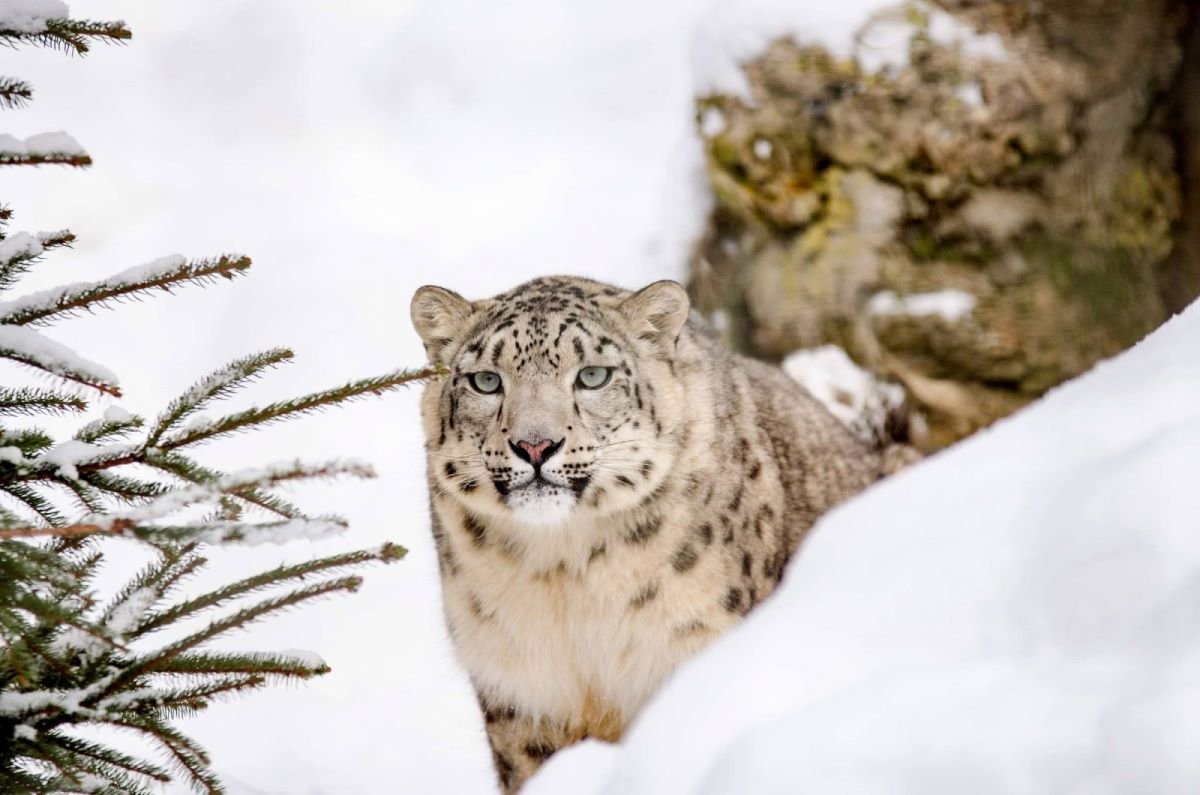
The Hemis National Park was established in the year 1981 which is named after the 400 years old Hemis Monastery. The Monastery is located within National Park itself. This high-altitude national park, located in the eastern part of Ladakh, is famous for harbouring the highest number of Snow Leopard. Covering a massive area of 4,400 sq. km, this is the only National Park or protected area situated at the north of the Himalayas. The altitude range of Hemis National Park is between 3,300-6,000 metre above sea level. This national park is known for some rare species of flora and fauna and also for its scenic beauty of snow-clad mountains and alpine forests. This is the largest national park in India as well as in the South Asia region.
Safari Zones:
The only option to explore this beautiful national park is trekking. Motor vehicles are not allowed beyond a certain point in the protected area. Entry fee into the park is Rs.20/- for Indian citizen and Rs.100/- for foreign nationals. The visiting hour is from 9:00AM to 5:00PM. You must take help of an expert naturalist or guide for the best experience inside the park. Spotting a Snow leopard as an arduous task which needs expert and experienced eyes and a very high level of patience.
Flora:
The Union Territory of Ladakh experiences very less amount of rainfall. Therefore, most of the areas of the National Park is barren land or covered with dry forests. But in contrary to that, the lower altitude areas of the park are covered by fir trees. The 2 most common trees of the lower altitude areas of the park are Steppe and Alpine.
Fauna:
The prime attraction of the Hemis National Park is the exotic and rare fauna species found in the park. Apart from Snow leopard, the other mammal species of Hemis are Blue sheep, Himalayan mouse hare, Ladakhi Urial, Eurasian brown bear, Himalayan marmot, Tibetan wolf etc. There are 16 mammal species and 73 bird species in the park. This National Park has always been an attraction for the birdwatchers. Some bird species of Hemis are Golden eagle, Fire-fronted serin, Robin accentor, Red-billed chough, Himalayan snowcock etc.
How to reach:
The nearest airport of Hemis National Park is the Leh Kushok Bakula Rimpochee Airport at Leh. Once you are at Leh, you can hire a cab to Stok, the nearest entry of the park. However, there are 4 entry points of the park and cabs are available from Leh to all the points.
Where to stay:
There is no any type of accommodation near the National Park. However, there are some villages inside the park and the villagers run some homestays to accommodate the tourists. The villagers are tourist friendly and polite. Alternatively, you can stay at Leh. There are a wide range of hotels at Leh.
Best time to visit:
The best time to visit Hemis National Park is between May to September. The weather remains comfortable during this time.
PERIYAR NATIONAL PARK & WILDLIFE SANCTUARY
The Periyar National Park is in the Idukki and Pathanamthitta districts of Kerala. The national park is formed by major watersheds of two important rivers in Kerala, Periyar and Pamba. Spread over an area of 925 sq. km., the Periyar Wildlife Sanctuary was declared in the year 1950. Out of the total area of the wildlife sanctuary, the core area of 305 sq. km has been declared as a National Park in the year 1982. Prior to that, Periyar was declared as a Tiger Reserve in the year 1978. In 1991 Periyar received financial assistance to preserve Asian elephant under Project Elephant. The National Park is a popular destination among the wildlife enthusiasts for its large herds of Asian elephants.
Boating in Periyar lake:
Boating in the Periyar lake is the best way to enjoy the wilderness of Periyar. If you are a little more adventurous, you can opt for bamboo rafting in the lake. There are two slots of bamboo rafting, full day and half day. Bookings of bamboo rafting is available on the official website of Kerala tourism.
Trekking:
You can trek the beautiful trails of Periyar for a first hand experience of the wilderness of the park. Trekking tours are organised under an expert guidance. Bookings are available on the official website of Kerela tourism.
Flora:
The Periyar National Park has a rich variety of flora. There are 1965 species of flowering plants, 171 grass species and 143 orchid species in Periyar.
Fauna:
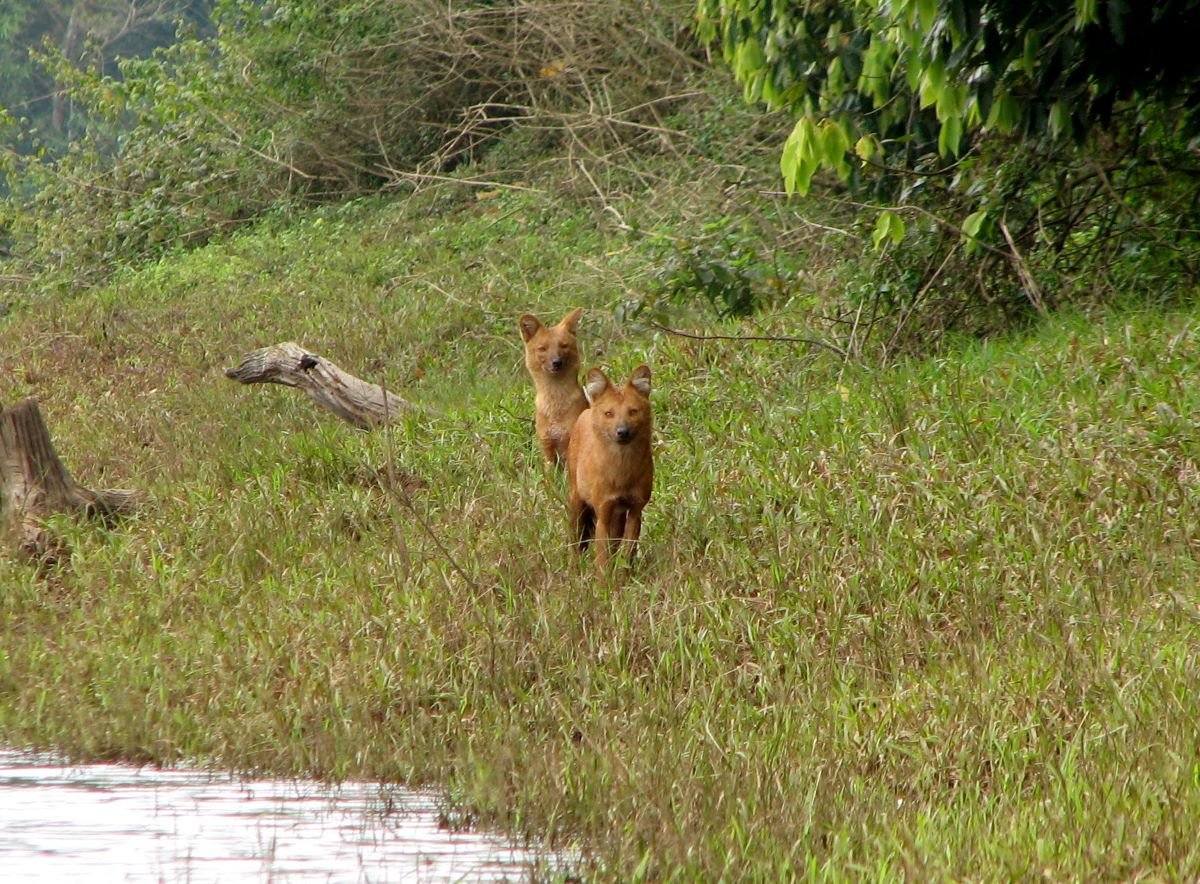
The Periyar National Park is home to 60 species of mammals including Asian elephant, Royal Bengal tiger, Indian bison, Leopard, Wild dog, Samber deer, Barking deer, Bonnet macaque, Nilgai etc. There are 265 species of birds both residents and migratory. Some common sightings are Malabar trogon, Indian pied hornbill, White-bellied treepie, Grey jungle fowl, woodpeckers, flycatchers, drongos and babblers. The park is also home to various reptiles including cobra, vipers, kraits etc.
How to reach:
By air: The nearest airport of Periyar National Park is the Madurai airport, Tamil Nadu, which is 140 km away from the park. The nearest International Airport is the Cochin International Airport which is 190 km away from the park. Cabs are available from both the airports to the park entry gate.
By train: The nearest railway station is Kottayam station which is 110 km away from Thekkady. This Railway station is well connected by train with all the major cities of India.
By road: The Periyar National Park is well connected by bus with the state capital of Kerala, Thiruvananthapuram. Alternatively, you can hire a cab either from Kumily which is about 4 km away from the park. This small town is the gateway of Tamil Nadu and Kerala. Hired vehicles are also available from Kottayam, Madurai and Kochi to Periyar.
Where to stay:
There are lots of cottages and camping accommodations around the national park. You have to book such accommodation in advance through the official website of Kerala Government.
Best time to visit:
The Periyar National Park remains open for tourists round the year. The weather is moderate even in the summer season. However, October to March is the best time to visit the park from the wildlife sighting point of view.
MANAS NATIONAL PARK

Manas National Park, situated in Assam, India, is a UNESCO World Heritage Site, a Project Tiger Reserve, an Elephant Reserve as well as a Biosphere Reserve. The name Manas derives from the Manas river, a major tributary of mighty Brahmaputra. Sprawling in a massive area of 950 sq.km., Manas shares its boundary with the Royal Manas National Park, Bhutan. The breathtaking scenic beauty of Manas National Park attracts thousands of tourists and nature lovers from every part of the world.
Safari zones:
For the convenience of the tourists, the entire park is divided into 3 safari ranges, namely, Bansbari (Central) range, Panbari (Western) range and Bhuyanpara (Eastern) range. Jeep safaris are available in all the three ranges of the National Park. The jeep safari is conducted in 4×4 Maruti Gypsy vehicles in two slots. The morning slot starts at 7:00AM till 11:00 AM and the afternoon slot starts at 2:00PM till 4:00PM.
Flora:
The combination of Sub-Himalayan Bhabar Terai and the Himalayan Subtropical Broadleaf Forest make Manas National Park is one of the richest biodiversity in the world. There are 543 plant species in the core area of the park.
Fauna:
Manas is the home to 450 species of birds, 50 species of reptiles, 55 species of mammals and a few species of amphibians. The park is also a major habitat of One Horned Rhinoceros, Asian Elephant, Royal Bengal Tiger, Leopard, Gaur (Indian Bison) and Asiatic Water Buffalo. Manas is also famous for some rare species of mammals like Assam Roofed Turtle, Hispid Hare (Assam rabbit), Golden Langur and Pygmy Hog. Critically Endangered birds like Bengal Florican and White Bellied Heron are also found in the Manas National Park.
How to reach:
By Air: Lokapriyo Gopinath Bordoloi International Airport, Guwahati is the nearest airport of the Manas National Park. Regular flights are available from all the major airports of India to Guwahati. The distance by road from Guwahati to Manas is 176 kms. You can easily hire a cab from Guwahati to Manas.
By Train: The nearest Railway Station is Barpeta Road which is 32 km away from Manas. Cabs are available from the station to the entry gate of Bansbari range of the park.
By road: Manas National Park is well connected by road with Guwahati and the nearby towns. Regular buses are available from Guwahati to Barpeta Road, the nearest major town of Manas. You can hire a cab from Barpeta Road to the park which takes one and half hour drive to reach the entry gate.
Where to stay:
There are many cottages and lodges around the National Park which give you a comfortable stay. You can choose one of them as per your budget. However, most of them remain booked during the peak season. Therefore, make sure to pre-book one before your visit.
Best time to visit:
October to May is the best time to visit the Manas National Park. The park remains closed for tourists during the rainy season.
CONCLUSION
Out of 106 National Parks, this is a random list of 10 popular National Parks in India which receive thousands of tourists every year. Apart from the above list, there are a plethora of beautiful wildlife destinations in India.
See the story HERE
What a fantastic list of India’s renowned national parks! I’ve always been drawn to the natural beauty and wildlife that our country has to offer, and this article provides a great overview of some must-visit destinations.
I had the pleasure of visiting Jim Corbett National Park last year, and it was an unforgettable experience. Seeing the majestic Bengal tigers in their natural habitat was a dream come true. It’s a place every wildlife enthusiast should visit at least once in their lifetime.
One park that’s still on my bucket list is Kaziranga National Park. The diversity of wildlife, especially the one-horned rhinoceros, is something I’ve always wanted to witness. If anyone has been there, I’d love to hear your experiences and any tips you might have for planning a visit.
Thank you for this informative and inspiring article. It’s a reminder of the incredible natural wonders that our country boasts, and I can’t wait to explore more of them!
Thank you so much for your feedback. I can definitely help you if you want to visit the Kaziranga National park as I am from Assam only. The best time to visit is March-April. Please contact me for any kind of help. Thank you once again.
Hi, I’m Jack. Your website has become my go-to destination for expert advice and knowledge. Keep up the fantastic work!