Drongos are aggressive, vocal and fearless. Did you know that there are many species under the ‘drongo’ family. In this article we are discussing about 6 common drongos of Assam.
Black drongo (Dicrurus macrocercus)

The Black drongo, also known as the ‘King crow’, is a common bird species found across many parts of Asia. It is a medium-sized passerine bird that belongs to the family Dicruridae, which also includes other drongos. The Black drongo is known for its aggressive behavior towards other birds.
Physical Characteristics:
The Black drongo is a medium-sized bird, measuring around 28 cm in length and weighing only around 50 grams. It has a distinctive black plumage, which makes it easily recognizable. The bird’s wings are long and pointed, and its tail is deeply forked. The bird’s beak is short and sharp, and its eyes are large and bright red.
Habitat and Distribution:
The Black drongo is a widespread bird species, found across much of Asia, including India, China, Southeast Asia, and parts of the Middle East. The bird prefers open habitats, including grasslands, farmlands, and urban areas. It is also commonly found near water bodies such as rivers, lakes, and ponds.
Behavior:
The Black drongo is known for its aggressive behavior towards other birds, particularly during the breeding season. It is a skilled hunter and will often chase and harass other birds in order to steal their food. The Black drongo is also known for its distinctive calls, which include a variety of whistles, trills, and chatters. The bird is highly territorial and will defend its territory aggressively against other birds and animals.
Diet:
The Black drongo is primarily an insectivore, feeding on a wide variety of insects and other small invertebrates. The bird is also known to eat fruit and nectar, particularly during the non-breeding season.
Conservation:
The Black drongo is not currently considered a threatened species, with a widespread distribution and a relatively stable population. However, like many bird species, it is threatened by habitat loss and fragmentation, particularly in urban areas.
Crow-billed drongo (Dicrurus annectens)

The Crow-billed drongo is a medium sized bird with a thick bill and forked tail. It is almost similar to the Black drongo. The only differences are its thicker bill, glossier feathers and lesser forked tail. This is a resident breeder of moist tropical forests of south-eastern Asia.
Physical Characteristics:
The Crow-billed drongo is a medium-sized bird. It has a distinctive, slightly curved bill that gives it its name, and its plumage is mostly glossy black with a slightly forked tail.
Habitat and Distribution:
The Crow-billed drongo is found in moist tropical forests of India, Bangladesh, Nepal, Bhutan, Myanmar, China, Laos, Cambodia, Philippines, Thailand and Brunei. This bird is a resident species, meaning that it does not migrate and is found year-round in its range.
Behavior:
The nesting season of the Crow-billed drongo is from April to June. Both the male and the female make the nest and the female incubates the nest. The nest is like a cup made of grasses.
Diet:
The Crow-billed drongo is primarily an insectivore, feeding on a variety of insects and other small invertebrates.
Conservation:
As per the International Union for Conservation of Nature (IUCN), the Crow-billed drongo is listed as Least Concern species in their Red list.
Bronzed drongo (Dicrurus aeneus)

The Bronzed drongo is a small bird belonging to drongo family. This is a resident bird of Indian subcontinent and southeast Asia. Bronzed drongo is known for its wide range of vocalization. The Bronzed drongo is particularly notable for its beautiful iridescent plumage, which shines in shades of blue, black, and bronze.
Physical Characteristics:
The Bronzed drongo is almost similar to the Black drongo in its look. But this is a smaller bird with a slender and forked tail. Its plumage is mostly black with a metallic sheen that shines in shades of blue, black, and bronze in the sunlight. The bird’s eyes are large and black.
Habitat and Distribution:
The Bronzed drongo is found in forests, forest edges, well wooded gardens and plantations of Indian subcontinent and southeast Asia. The bird is a resident species of Indian subcontinent and southeast Asia.
Behavior:
The Bronzed drongo forages singly or in a flock of two or three. They actively forage insects in their flight. Sometimes they are seen foraging with other birds as well. It is also known for its aerial acrobatics, including its ability to catch insects in mid-air and its habit of chasing other birds and animals in the air. The bird is highly territorial and will defend its territory aggressively against other birds and animals. Bronzed drongo is known for their vocalization. They can mimic other bird’s call perfectly.
Diet:
The Bronzed drongo feeds on various insects and invertebrates.
Conservation:
The Bronzed drongo is not currently considered a threatened species, with a stable population and a wide distribution.
Hair-crested drongo (Dicrurus hottentottus)

This is a big, stocky and dark drongo with highly iridescent wings and shiny feather. This species was formerly known as ‘Spangled drongo’. This species is native to India, Bangladesh, Bhutan through Indochina to China, Indonesia and Brunei. The Hair-crested drongo is known for their wide range of vocalizations, and aerial acrobatics.
Physical Characteristics:
The Hair-crested drongo is particularly notable for its unique crest of feathers on its head, which can be visible from a very close proximity. Its plumage is mostly glossy black with a metallic sheen.
Habitat and Distribution:
The Hair-crested drongo is found in a variety of habitats, including forests, scrublands, and agricultural areas.
Behavior:
The bird is highly territorial and will defend its territory aggressively against other birds and animals.
Diet:
The Hair-crested drongo is primarily feed on insects and nectar.
Conservation:
The International Union for Conservation of Nature (IUCN) in their Red list, enlists this bird species as a Least Concern.
Lesser racket-tailed drongo (Dicrurus remifer)
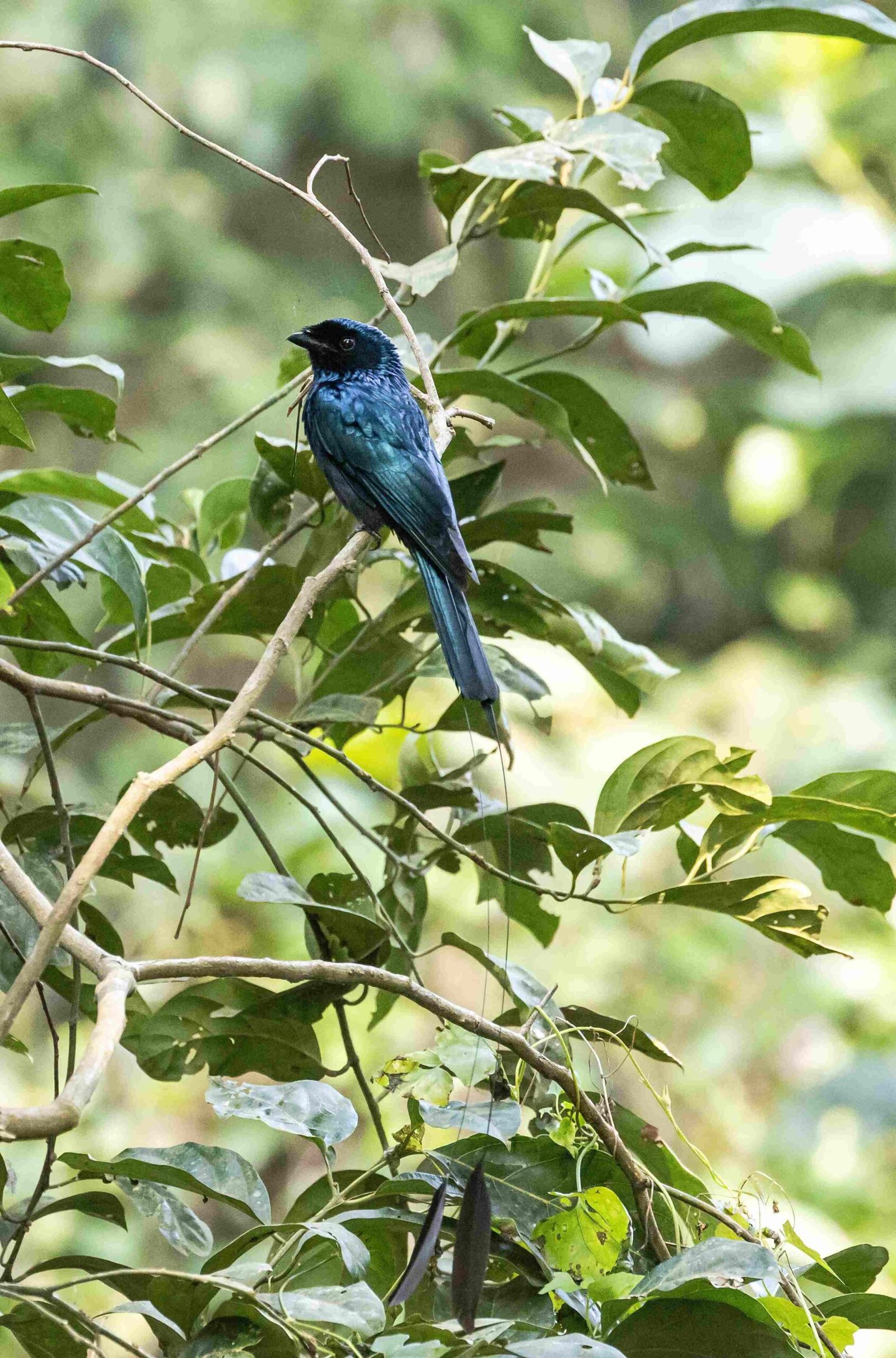
The Lesser racket-tailed drongo is a small bird species of the family Dicrurus. This is a resident bird of Indian subcontinent and southeast Asia.
Physical Characteristics:
This is a small sized bird with two extravagantly long tailed feathers tipped with plumes which are similar to a racket. It has glossy black plumage with iridescent black and blue feathers.
Habitat and Distribution:
The Lesser racket-tailed drongo is found in a variety of habitats which includes mid to high altitude tropical forest. They are found in several countries in Southeast Asia, including India, Bhutan, Myanmar, Thailand and Vietnam. This bird has a wide and impressive vocal range.
Behavior:
The Lesser racket-tailed drongo is an agile and acrobatic bird. It has a unique habit of perching at the top of a tall tree and making aerial sallies to capture insects. They are also known to mimic alarm calls of other bird species to warn other animals in the area of potential threats.
Diet:
The Lesser racket-tailed drongo is primarily an insectivore, feeding on a variety of insects and other small invertebrates.
Conservation:
The Lesser racket-tailed drongo is not currently considered a threatened species. It has been listed as Least Concern category in the IUCN Red list.
Greater racket-tailed drongo (Dicrurus paradiseus)
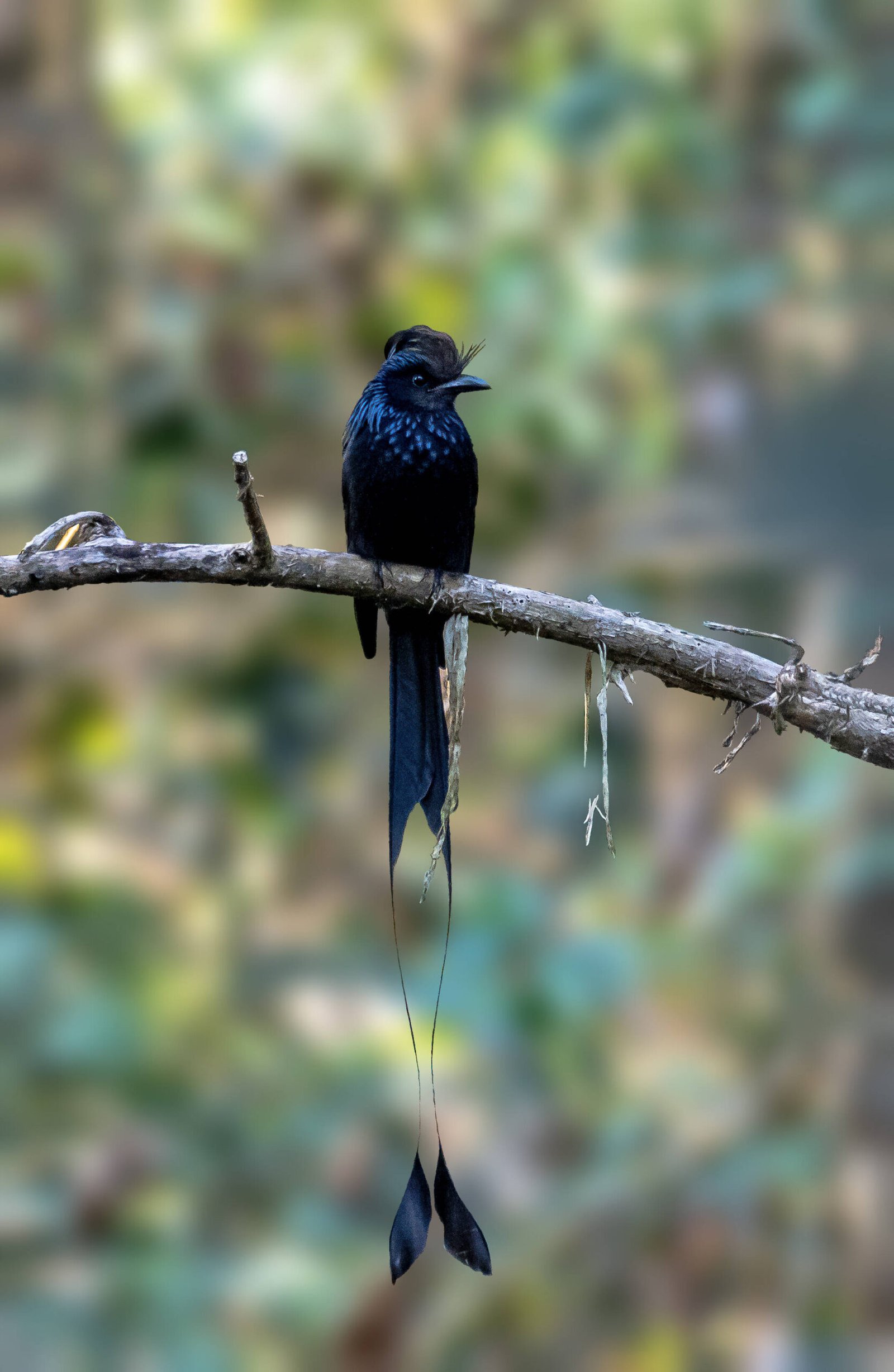
The Greater racket-tailed drongo is a resident bird of south and southeast Asia. They are found in the countries like India, Bangladesh, Nepal, Bhutan, Myanmar, Laos, Sri Lanka, Thailand and Cambodia.
Physical Characteristics:
The Greater racket-tailed drongo is almost similar to the Lesser racket-tailed drongo with an elongated tail and a racket like outer tail streamer. But this bird is a little larger with a prominent crest on the head.
Habitat and Distribution:
The Greater racket-tailed drongo is found in woodlands and broadleaved forests where it is found associating with mixed flocks and with other drongos.
Behavior:
The Greater racket-tailed drongo is an expert in mimicry of other bird’s calls. They can also produce metallic jingling sounds.
Diet:
The Greater racket-tailed drongo is primarily an insectivore, feeding on a variety of insects and other small invertebrates.
Conservation:
The Greater racket-tailed drongo is not currently considered as a threatened species and listed in the IUCN Rest list under the head of Least Concern.
For more contents please click HERE.
1 thought on “Drongos of Assam: 6 Most Common Drongo Species Found in The State of Assam”